Sort real situations into yours, what is within your control, and not yours, what is not. Answer, read the Stoic reasoning, go on. Free, no account.
One question each time: is this within your control (yours) or not (not yours)? Choose, read the answer, go on.
Fortuna picks the question, you pick the answer. One random exercise drawn from every form and all twelve topics at once. Boethius wrote in prison that the wheel turns, and that the only reproach you can make to Fortuna is that you expected her to stand still (his case).


No theory to memorize, but a movement you practise until it runs by itself. You do not pass here; you sharpen.
Something happens and a judgment rushes up at once. Catch it before you go along with it: this is an impression, not yet a fact.
Ask of each part: is this mine or not? The bare fact falls into one box, your response to it into the other.
Do carefully what is yours, and let the rest go. Not because it does not matter, but because it was not yours to hold.

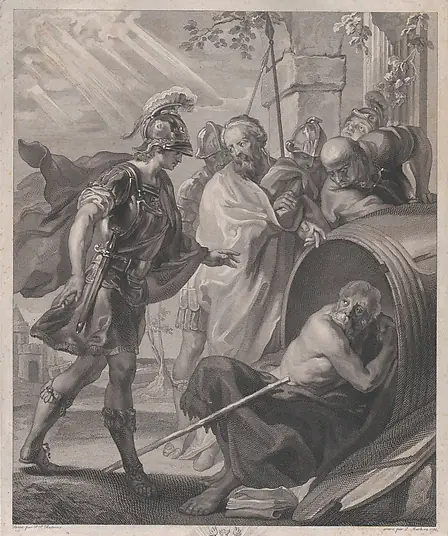
The most powerful man in the world, and one request: stand out of my sun.

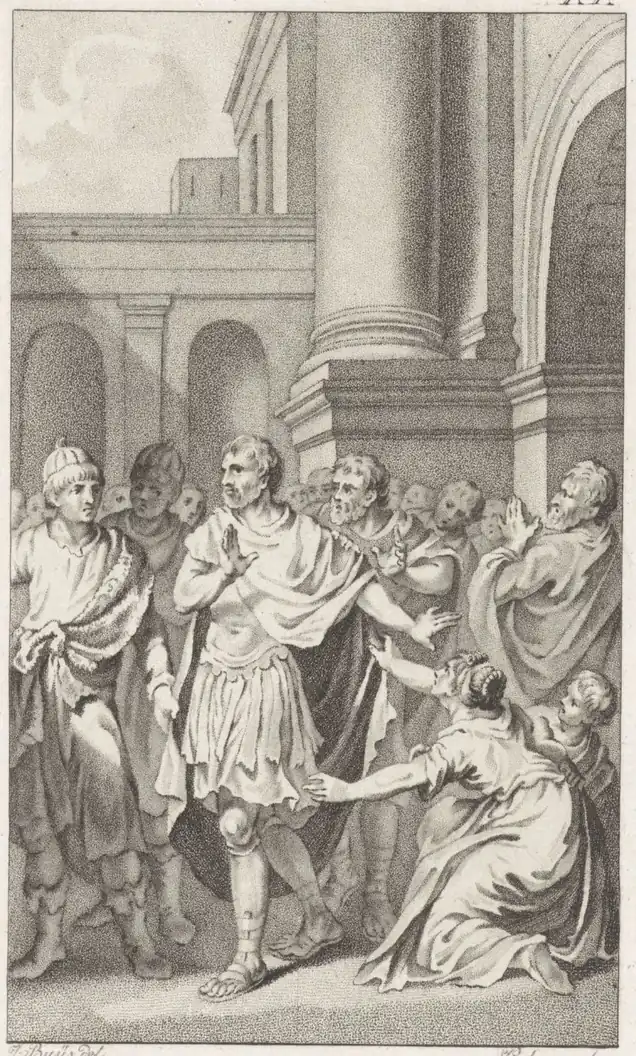
He had promised to go back to Carthage, and knew what waited for him there.

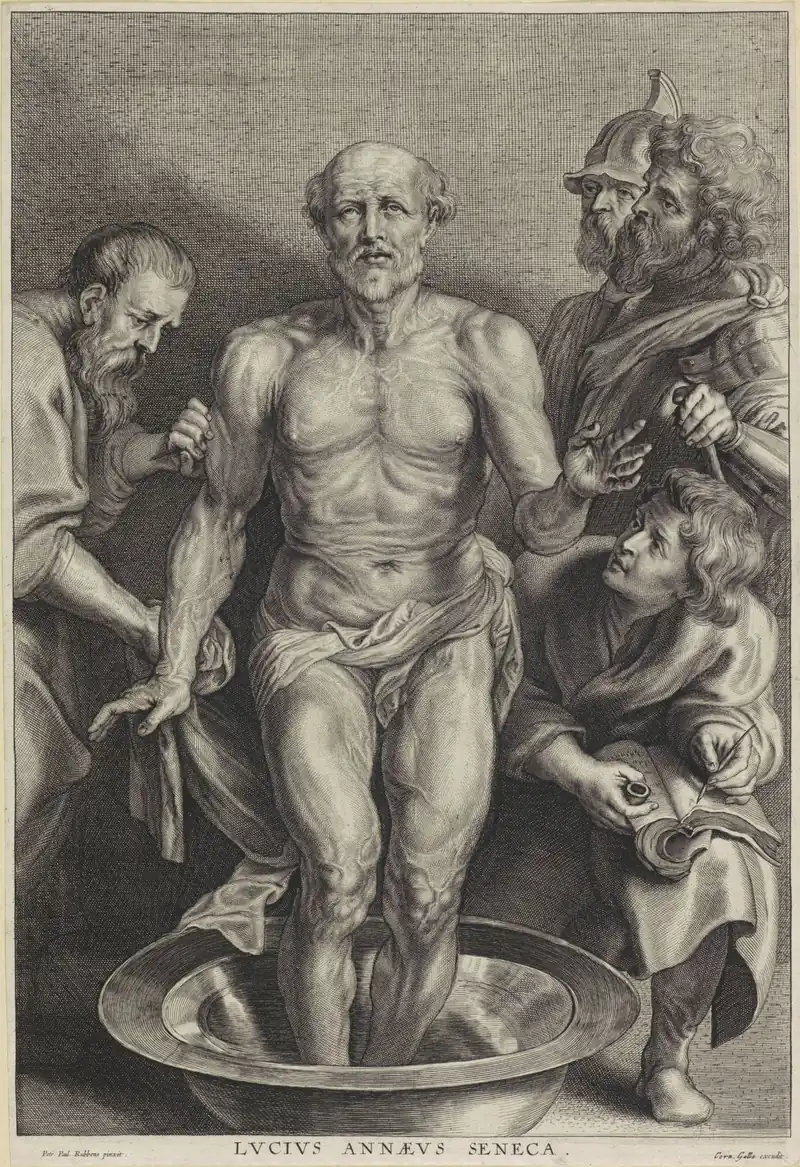
The richest philosopher in Rome, and the question whether he lived what he taught.
The Stoics divided reality in two: what lies within your power, and what does not. Nearly all unrest arises from mixing those two up. We fret over the one box while the freedom sits in the other. Learning to sort is the whole art, and you never finish learning it.
Start from your question: What is Stoicism? · How to stop overthinking · How to let go · How to control your emotions · How to forgive yourself · How to stop caring what people think · The circle of control
The areas where a person loses balance. Each has its own page with the full set of exercises. Open one for the deeper layer, and practise the propositions that belong to it right away. Each topic keeps growing: examples and exercises are added over time.
Yours, Not Yours is not new. It is the core of an ancient teaching, and that teaching surfaces in two places you might not immediately put side by side, but which say exactly the same thing.
Read more about the dichotomy of control · The Serenity Prayer and Stoicism · Glossary of Stoic terms · The Stoic philosophers · The objections to Stoicism · Values as a compass · Nine Stoic exercises · Stoic quotes, source checked
Two thousand years ago, Epictetus opened his Handbook with a single distinction: some things lie within our power, others do not. Our judgments and choices do, everything beyond them does not. Whoever learns to see that sharply becomes free. The whole Stoa is an elaboration of it.
Almost everyone knows the other version, even those who never read a philosopher. Reinhold Niebuhr wrote it in the nineteen thirties, and it became world famous in circles of recovery and self-help. But the core comes straight from Epictetus.
That third piece, the wisdom to tell the difference, is the art. Anyone can say afterwards which box something belonged in; the hard part is seeing it in the heat of the moment. That is what this place is for.
This is not a course you pass. It is a new way of thinking you keep sharpening, day after day. Some distinctions you only see clearly the hundredth time. Come back, practise again, and notice how it slowly becomes a reflex.
This site is made by one person, with a few volunteers who read along and suggest ideas. If something is unclear, if you spot a mistake, or if you have a case worth adding, we would like to hear it.
Or mail directly: hello (at) yoursnotyours.com