Thrasea and the walk out of the Senate
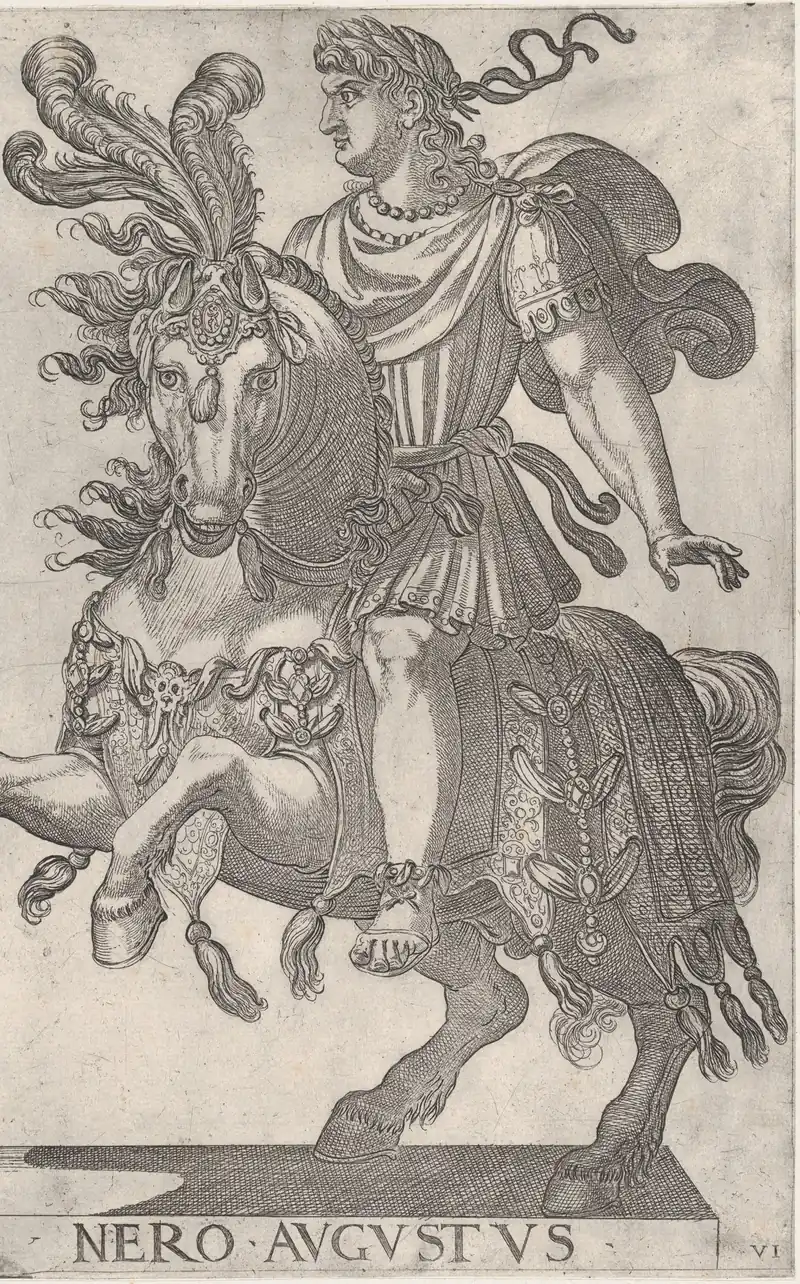
In the year 59 Nero had his mother Agrippina killed. When the news reached Rome, the Senate did what was expected of it: it proposed thanksgiving festivals, celebrating the emperor's deliverance from a supposed plot everyone saw through as fiction.
Thrasea Paetus had been consul and counted as the conscience of that house. He gave no speech, tabled no counter-motion and called nobody to resistance. He stood up and walked out of the chamber.
Nothing further happened that day. There was no punishment, no charge, no debate. But everyone had seen it, and that was precisely the problem: in a chamber where everyone assented, one empty seat was a statement.
What happened next
From the year 63 he stopped appearing in the Senate at all. That too was a statement, and Nero read it as one.
In 66 he was prosecuted. The official points were thin: he had refused to recognise the divinity of Nero's dead wife, he did not sacrifice for the emperor's health, he did not attend. Tacitus lets the prosecutor voice the real complaint: his face, which never showed any sign of assent.
The Senate, which he had served all his life, condemned him. His son-in-law Helvidius was banished, his daughter Fannia followed him into exile, and a generation later the biography written about him was publicly burned.
The crossroads
Everyone around you assents to something you know to be untrue. Going along costs you nothing visible. Walking out changes nothing about it.
The sorting
The tempting sorting is that his walking out achieved something. It achieved nothing. The festivals went ahead, Agrippina stayed dead, and Nero ruled another nine years.
That is exactly where the lesson sits. The Senate's decision, the emperor's reaction and the course of history lay outside him, and he knew it. What did lie with him was whether he would lend his voice to a lie. That is a small territory, and it was the only one he had.
Note the form he chose. No speech, no protest, no attempt to bring others along; that would have been trying to steer the outcome, and the outcome was not his. He did only what was his: withdrawing his own participation.
Epictetus, who knew this circle personally, uses precisely this distinction. You do not have to change the world in order to decide which part you play in it.
The objection
There is a real objection, and it is not a gentle one. His stance cost him his life, his son-in-law his, and his daughter three banishments. You can maintain that a living senator with a compromise would have counted for more than a dead senator with a clean conscience.
And his silence had a price he did not pay himself. Whoever walks out of the chamber leaves the chamber to the people who stay. Tacitus, who admired him, raises that question too, and does not answer it.
The question for you
In which meeting, conversation or group chat do you nod along with something you do not stand behind? And what is your version of standing up and walking out?