Zeno and the shipwreck
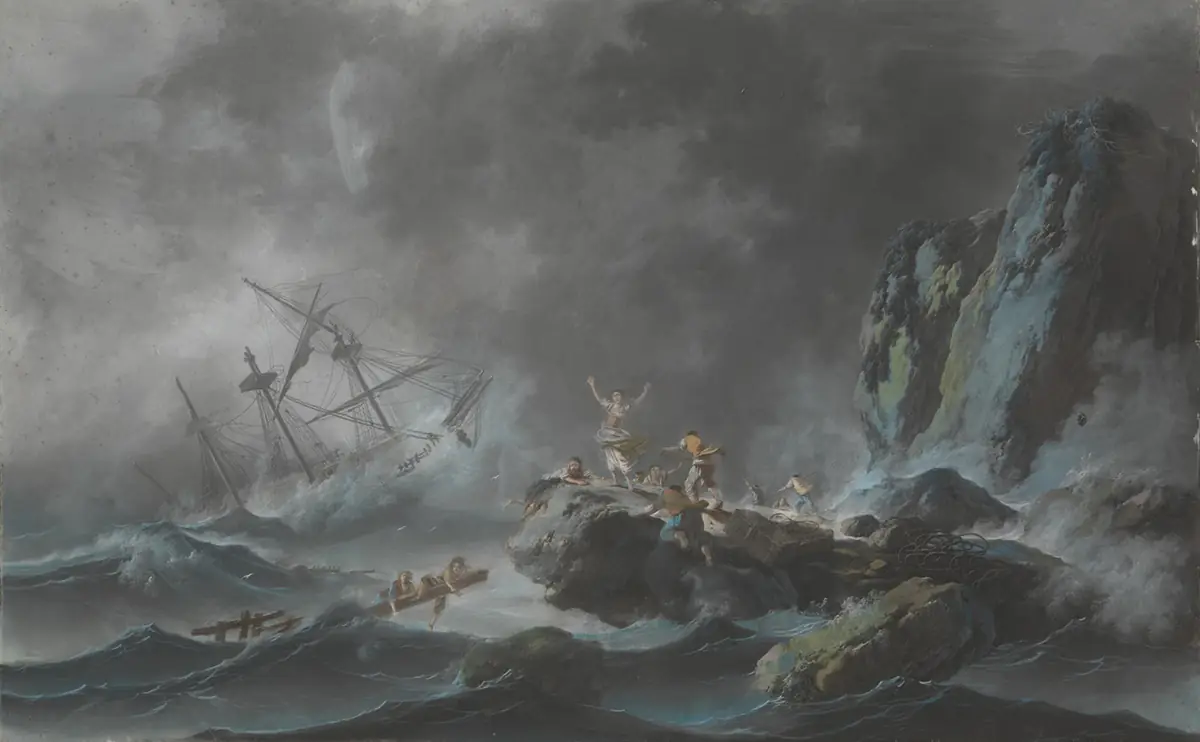
Zeno of Citium traded in purple dye, extracted from the gland of sea snails and so laborious to produce that a pound of it fetched more than a pound of silver. Kings wore it; ordinary people never saw it up close. He was around thirty, from a Phoenician merchant family on Cyprus, and was sailing with a full cargo towards Piraeus around 312 BC when his ship went down.
Everything he owned and everything he had borrowed sank in the same night. He reached Athens a man without a trade. Wandering aimlessly, he ended up in a bookshop, where the seller was reading aloud from Xenophon's recollections of Socrates. Zeno stood there and listened to the whole book. Then he asked where such men were to be found nowadays.
At that moment the philosopher Crates was passing outside, a man who had given away his own fortune and walked about in rags. The bookseller pointed at him and said: follow him.
What happened next
He followed Crates and remained a student for some twenty years: first with the Cynics, then at the Megarian school and the Academy. Only late in life did he begin teaching himself, and he chose for it a place others avoided: the painted colonnade on the agora, where under the Thirty Tyrants hundreds of citizens had been killed. It was public and it was free, and anyone could walk in. His students were first called Zenonians, later people simply named them after the place where they stood. On his death the Athenians honoured him, a foreigner, with a golden crown and a tomb at public expense.
The crossroads
Everything gone in one day: capital, trade, plan, and other people's goods that he was carrying. There is no version of this day in which he comes out well. The question that remains is the barest there is: what now.
The sorting
The tempting sorting is that the shipwreck turned out to be good. That is not what the Stoa says. Loss remains a thing you would rather not have; the Stoics called it not a good but a dispreferred indifferent, and that evening Zeno was simply a ruined man.
The second temptation is to say he made the best of it. That is optimism, and optimism is precisely what Stockdale later identified as the attitude that breaks people.
What actually happened is more exact and duller. The storm, the sea, the market and the cargo had never been his; he held them on loan and fate asked for them back. What remained was what had always been his: where he put his attention, and what he did the next day. He walked into a shop and stood there listening. That was all it was.
His famous line, that he made a prosperous voyage precisely when he suffered shipwreck, is therefore not a statement about the shipwreck. It is a statement about what he did with it.
The objection
He could only say that line once it had turned out well. On the beach he knew nothing, and most people who lose everything do not go on to found a school. Whoever uses this story to tell someone in the middle of their loss that it will all work out is using it wrongly, because the Stoa promises that nowhere. The story says only this: on the day itself there was nothing to know, and still there was something to do.
The question for you
Which loss in your life turned out, in hindsight, to be a turn in the road rather than an ending? And if you lost something now: would you walk into the bookshop, or keep standing on the beach?