The fire of Lyon
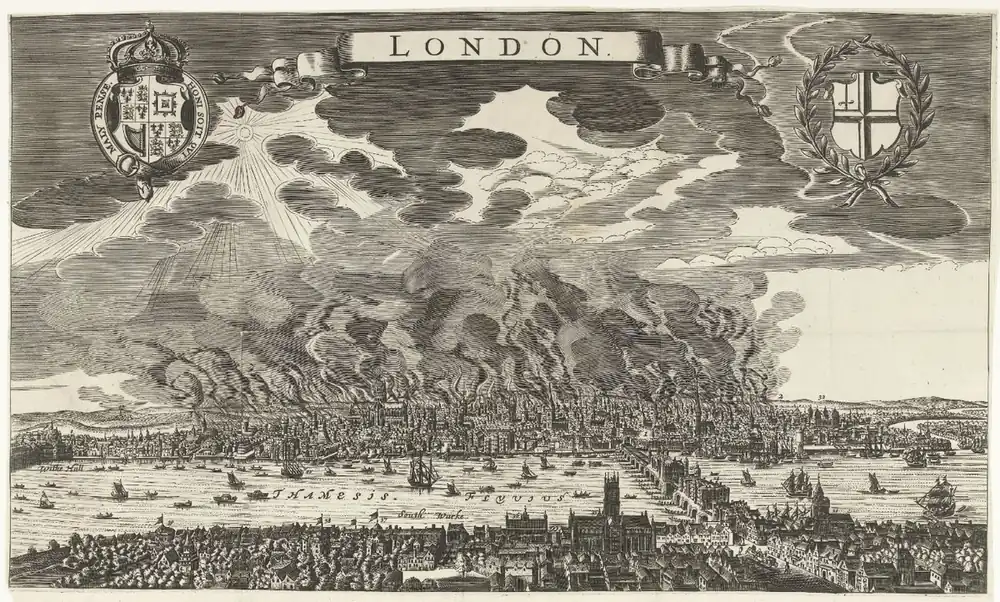
Lugdunum, present-day Lyon, was the most important city of Roman Gaul: a junction of roads, the seat of the governor and of the imperial mint. Shortly after the great fire of Rome it burned almost completely down in a single night.
Seneca received the news through his friend Liberalis, who came from that city and was devastated by it. What Seneca wrote back is one of the few ancient texts in which a disaster is not explained as divine punishment or as an omen.
He writes that between the fire and the news of it lay only one night, and that in that single night the city ceased to exist while nobody knew anything of it. And he draws from that not the conclusion that life is meaningless, but that you must be prepared for everything that can happen, and that it almost never turns out the way you feared or the way you hoped.
What happened next
Tacitus records a detail that completes the story. When Rome had largely burned down the year before, Lyon had sent four million sesterces to help. Nero sent precisely that sum back when Lyon itself lay in ashes.
The city was rebuilt and remained for centuries the most important of the region.
Seneca's letter is included as number ninety-one in the collection to Lucilius. He wrote it in the year before his death, in the period when he had withdrawn from court and in three years produced the work to which he owes his place in history.
The crossroads
A city that was there in the evening is gone by morning. Nobody had done wrong and nobody could have seen it coming.
The sorting
The tempting sorting is that such things simply have to be accepted. Seneca writes something more exact: that they have to be foreseen.
The fire, the flames and the wind lay outside everyone. There is nothing to sort there; it is entirely the other box. What did lie with him was the question of when he would think about it: only afterwards, or beforehand as well.
That is the exercise the Stoics called premeditatio malorum, the premeditation of evils. Not to suffer in advance, but to take from fate its element of surprise. Whoever has never considered that a city can burn down is struck twice: by the fire, and by the discovery that such a thing is possible.
Seneca's addition is the most honest part. He does not promise that it then stops hurting. He says the blow is smaller when it is not also unbelievable.
The objection
The exercise has a downside Seneca does not mention. Whoever constantly imagines what could go wrong can also get stuck there; the difference between preparation and brooding is thinner in practice than in theory.
And there is a limit to what foresight yields. A city that burns down while you had thought about it has still burned down. The exercise changes nothing about the world and only something about the second blow, the one of bewilderment. That is less than it sounds, and it is exactly what Seneca promises: no more, but no less either.
The question for you
What is the very great city in your life that you silently assume will still be standing tomorrow? And when did you last calmly consider that this is an assumption?