Posidonius and the attack of gout
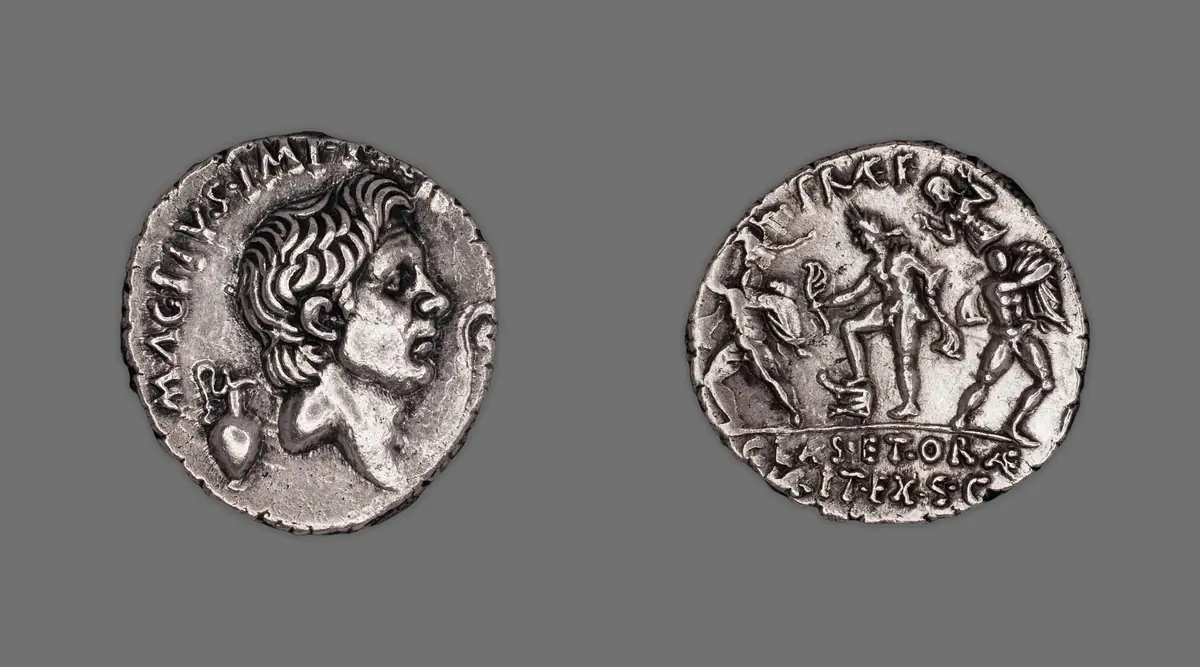
Posidonius of Rhodes was the leading scholar of the Greek world: historian, geographer, astronomer, philosopher. He calculated the circumference of the earth and was among the first to explain the connection between the tides and the moon.
Pompey, at that moment Rome's most powerful general, visited him twice and had his lictors lower their fasces at the door, an honour paid to a superior.
At one of those visits Posidonius was laid up with gout. Gout is not a discomfort but a pain that makes people cry out. He received Pompey anyway and delivered a discourse, on the proposition that nothing is good except what is honourable.
While he was speaking the pain struck. He interrupted himself and said to the pain: it does you no good. However troublesome you are, I shall never admit that you are an evil. Then he went on where he had left off.
What happened next
Cicero recorded the story, and he had it from Pompey himself. That is unusually precise for an ancient anecdote: not a tradition passed through third parties but the account of someone who was there.
Posidonius came from Apamea in Syria and settled around 95 BC on Rhodes, where his school drew Roman notables for years. Cicero too studied with him.
Of his vast body of work not one book survives complete. We know him almost entirely from quotations in others, and the scene with the gout is one of the few moments where he becomes visible as a person rather than as a source.
The crossroads
Your body does something you cannot stop, in the middle of the one thing you still can.
The sorting
The tempting sorting is that he did not feel the pain. His own words deny it directly; he calls it troublesome and addresses it, and you do not do that with something you fail to notice.
The cut runs exactly through the sentence he spoke. The pain itself lay outside him: it came, it increased, he could not think it away. What did lie with him was the judgment about it, and that is the one thing he refused to surrender. He did not deny that it hurt; he denied that it was bad.
That distinction looks like hairsplitting until you see what it yields in practice. Whoever calls pain an evil adds something to the pain: the demand that it stop, and the conviction that something is deeply wrong as long as it lasts. That second part is what makes it exhausting.
And he went on with his discourse. That is the real act in this story, not the fine sentence.
The objection
The claim that pain is not an evil is the part of the Stoa that provokes the most resistance, and rightly. With chronic pain, with illness that does not pass, it sounds like a denial of what people are going through, and it has been used that way: to tell sufferers they are making a fuss.
And there is a difference between an attack that passes and pain that stays. Posidonius spoke during an attack, with the prospect that it would subside. What he said is impressive. Whether it also holds for someone enduring years of it without prospect, the story leaves open.
The question for you
What are you putting off because you do not feel well? And which part of it could happen anyway, if you felt the pain without letting it write the schedule?