Epictetus and the child
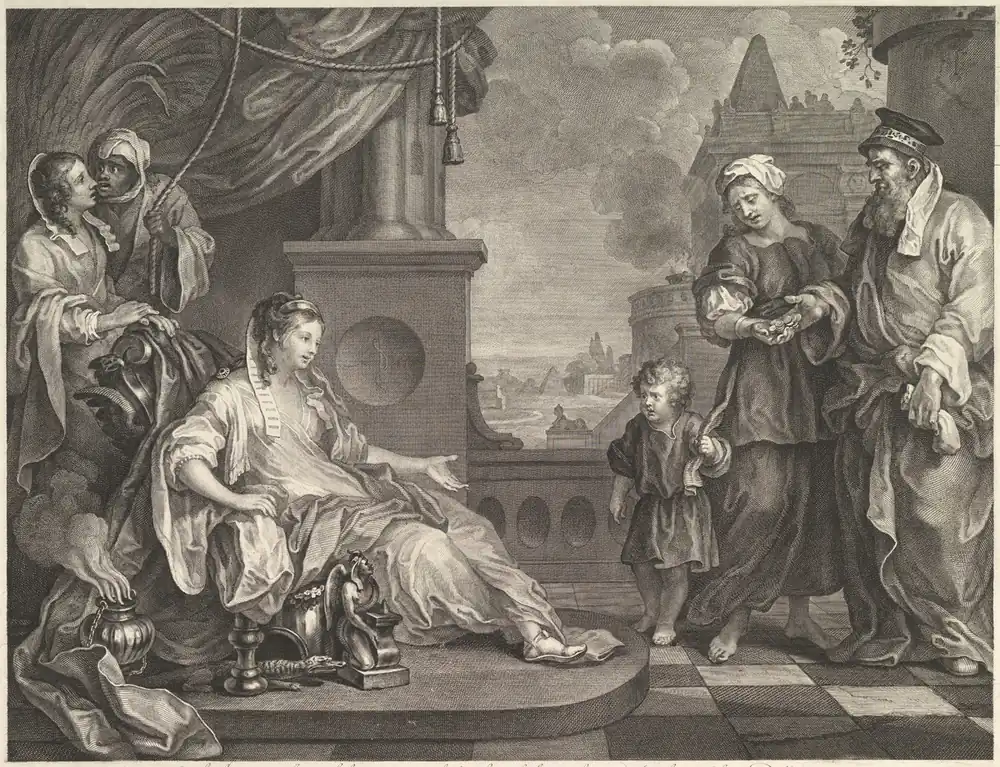
Exposing newborns was legal and common in the Roman world. A child that was not acknowledged or could not be supported was left in a public place; what happened next depended on who came by.
Epictetus was living at the time in Nicopolis and was old. He owned a mattress, a mat and an earthenware lamp. He had never married and had built his entire teaching around the distinction between what you own and what you hold on loan.
An acquaintance of his was about to abandon his child. Epictetus took it in. To be able to raise it he brought a woman into his household, something he had not done in his whole life.
It is the only thing we know about his later years.
What happened next
The detail comes from Simplicius, who wrote an extensive commentary on the Enchiridion in the sixth century, more than four hundred years after the event. It appears in passing, as background, not as a lesson.
What became of the child we do not know. There are no names, no dates and no further mentions.
What the detail does do is correct the picture that can arise from his lectures. Whoever reads only the maxims is left with a teacher who advises holding on to nothing. Whoever knows this as well is left with an old man who took on, near the end, something he could no longer detach himself from.
The crossroads
You have practised letting go all your life. Then something lies before you that is only saved if someone holds on.
The sorting
The tempting sorting is that here he broke his own teaching. That is the most common mistake made about Stoicism, and this case is exactly the place to correct it.
The teaching does not forbid loving. It forbids demanding that it last. The third chapter of the Enchiridion says so literally: the child you love is mortal, and whoever knows that is not shattered when it dies. Nowhere does it say you should not take a child in.
The cut is therefore this. Whether the child would live, whether it would be healthy, whether it would be grateful to him: all outside him. Whether he would take it in: entirely his, and it was exactly the kind of act his whole teaching was meant for.
And there is a reversal in it worth reading. Someone who holds on to nothing can easily take something on. He had no property to defend, no position to protect, no plans to be disrupted. Detachment did not make him indifferent but available.
The objection
One sentence in a late commentary is thin evidence. Simplicius wrote four hundred years afterwards and had an interest in making his teacher look human, since even then Stoicism was accused of coldness.
And even if it is true, it does not resolve the tension inside the teaching itself. The third chapter of the Enchiridion remains uncomfortable reading, and Epictetus softens it nowhere. That he acted differently from his sharpest formulation may mean the formulation was too sharp, or that he did not manage it himself. Both are possible and we shall never know.
The question for you
Which responsibility lies on your path that is formally not yours? And do you ever use letting go as a dignified word for looking away?